Danielle Kurin is an anthropologist and academic whose work focuses on ancient cultures, material practices, and human remains, particularly in the Andean region of Peru. Danielle Kurin served as a faculty member at the University of California, Santa Barbara, where she taught anthropology at both graduate and undergraduate levels and directed the Walker Bioarchaeology and Forensic Bone Lab. Her research includes extensive fieldwork in Peru, leadership of the Andahuaylas Bioarchaeology Project, and contributions to museum exhibitions and scholarly publications. With a background in studying ancient technologies, cultural artifacts, and human history, her expertise connects to broader discussions about how materials are shaped, used, and understood, including processes such as how a piece of pottery moves from raw clay to a finished form.
How a Piece of Pottery Moves from Clay to Finished Form
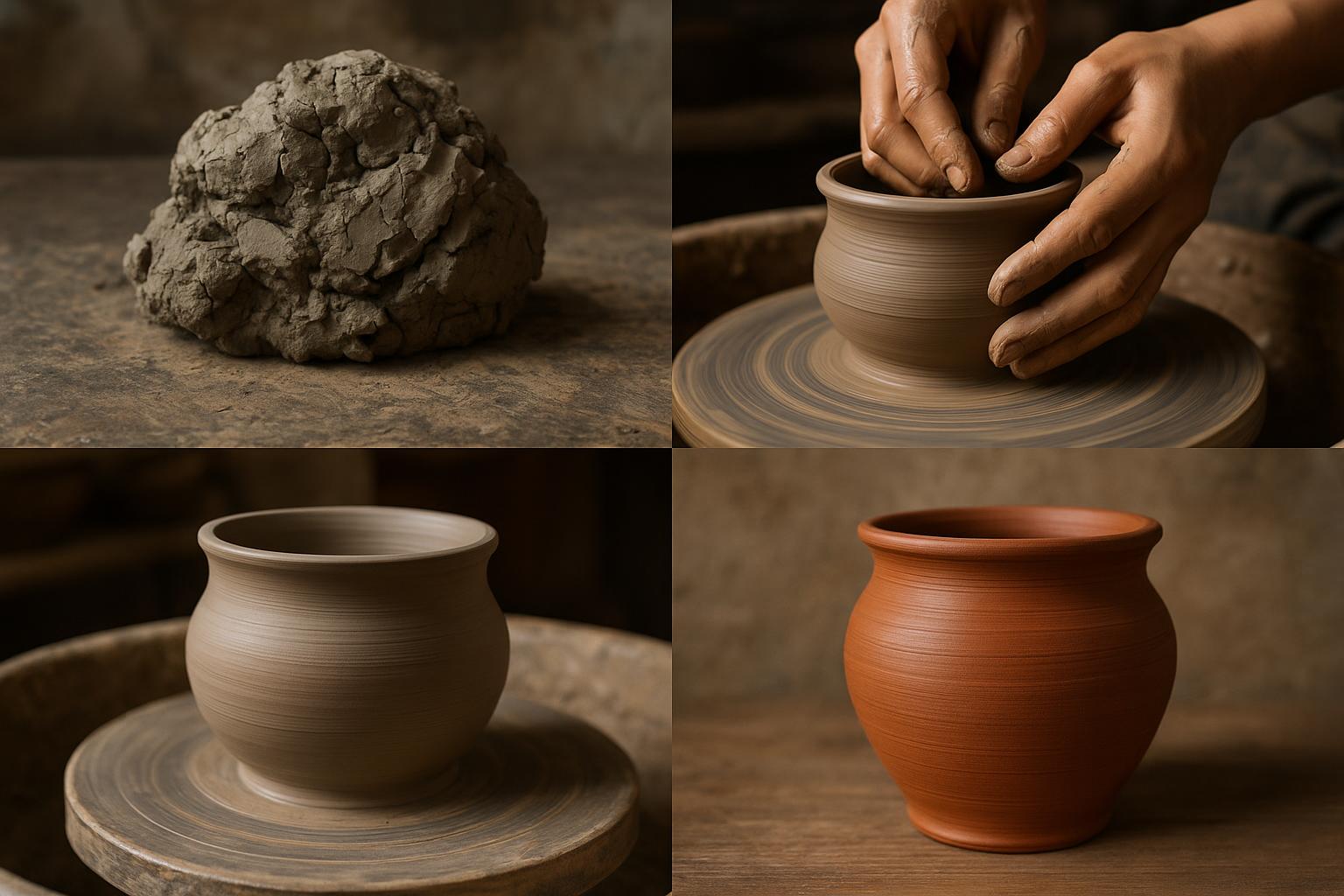
A pottery piece does not become a mug, bowl, or vase all at once. It changes in stages, and each stage limits what can happen next, so small early choices can shape the final surface and strength. Potters follow a deliberate order because clay behaves differently when it is wet, partly dry, or fired hard.
The work starts with the clay body. A more porous, lower-temperature clay can suit decorative ware, while a denser body can better fit pieces meant for regular use. The potter wedges the clay by pressing and folding until moisture and texture feel even, which keeps the clay from feeling slick in one spot and stiff in another.
Next comes forming. On a wheel, the potter lifts and opens the spinning clay with steady pressure; by hand, they build with coils or slabs and then join and smooth the seams. Either way, the potter aims for an even structure before chasing details. Good forming helps the piece dry evenly and hold its shape.
A mug shows why that matters. Walls that vary in thickness often dry at different rates, and weak areas can strain where a handle meets the body. During forming, the potter sets proportion and support, not a finished surface.
The newly shaped object is greenware, meaning unfired clay that still breaks easily. It cannot go straight into the kiln because water must leave first, and the walls need time to firm up together. Potters manage airflow and cover pieces as needed so edges do not race ahead of thicker sections. Slow, even drying lowers the risk of joints pulling apart.
Drying can expose trouble spots. One area may shrink faster than another, which builds stress into the form. That stress can show up as warping or cracking, especially around joins and changes in thickness.
When the clay reaches leather-hard, it feels firm but still workable. The potter trims excess clay, cleans edges, and adjusts the base so the piece sits flat. Leather-hard work focuses on refinement and small corrections, when the form can take a tool without slumping.
After the ware turns bone dry, the potter loads it into the kiln for the first firing. This bisque firing hardens the clay and makes it safer to handle, but it leaves the piece porous enough to absorb water and accept glaze. A solid bisque also reduces handling damage during glazing because the surface no longer dents like greenware.
Glaze creates the finished skin. The potter can brush, dip, or pour it, then let the coating dry to a chalky look before firing. Clean handling and controlled moisture matter because dust, skin oils, or overly damp bisque can contribute to defects such as crawling. Careful application also helps the glaze melt evenly instead of breaking away from the edges.
The second firing finishes the transformation. In the kiln, the glaze melts and bonds to the clay, forming a glasslike layer, while the clay body becomes denser as firing reduces porosity and boosts strength.
When the kiln cools, the potter unloads the ware and checks its function as well as appearance. A mug needs a rim that feels comfortable and a handle that holds without stressing the joint, and a bowl needs a stable base that sits flat. The finished piece, at its best, shows that each stage supported the next without forcing last-minute fixes.
About Danielle Kurin
Danielle Kurin is an anthropologist and former faculty member at the University of California, Santa Barbara, where she taught and directed a bioarchaeology and forensic bone lab. Her research focuses on ancient populations in the Andes, particularly in Peru, and includes fieldwork, museum collaboration, and scholarly publication. She has held academic and research roles in the United States and Latin America and has led long term archaeological projects focused on human remains and cultural history.