Dr. Alex Culbreth, a physician and longtime hobby beekeeper in Valdosta, GA, brings a blend of clinical experience and hands‑on apiary management to the subject of winter hive care. With a professional background in advanced gynecologic procedures and leadership roles in regional medical organizations, he also maintains more than three dozen beehives that supply local honey each summer. His understanding of seasonal demands, colony behavior and resource needs informs a practical approach to preparing hives for cold weather. Drawing on years of tending bees through fluctuating Southern winters, Alex Culbreth emphasizes the importance of proactive steps that protect colony strength and support long‑term survival. This introduction outlines his perspective on timely winter tasks that help hobby beekeepers maintain stable, resilient hives as temperatures fall.
Winter Tasks for Hobby Beekeepers
For hobby beekeepers managing multiple colonies, the time-sensitive phase between late fall and early winter sets the tone for hive survival. As temperatures drop and nectar disappears, this window becomes the last chance to prepare before cold weather makes direct intervention unsafe. Once bees cluster and access ends, outcomes depend entirely on steps beekeepers have already completed.
Beekeepers begin by conducting a final inspection to confirm whether each colony is ready to overwinter. They check for a functioning queen, observe brood patterns – the arrangement of eggs, larvae, and pupae – and assess frame stability. They also evaluate disease risk, especially by checking for Varroa destructor, a parasite that weakens bees and spreads viruses. If the levels of this mite exceed seasonal thresholds, they apply treatment before the colony clusters.
During that visit, beekeepers check hive weight. Colonies in colder regions typically require 60 to 90 pounds of stored honey or an equivalent sugar-based supplement. They lift the hive or use scales to estimate internal stores. If reserves fall short, they add feeding while daytime temperatures still allow the bees to move inside the box.
Once they confirm sufficient survival resources, beekeepers turn their attention to moisture buildup. Bees generate heat as they cluster, which creates condensation on cold surfaces. That moisture can drip down and chill the colony. Beekeepers use upper ventilation (for example, a small top vent), quilted inner covers, or moisture-absorbing materials to control this without introducing direct airflow.
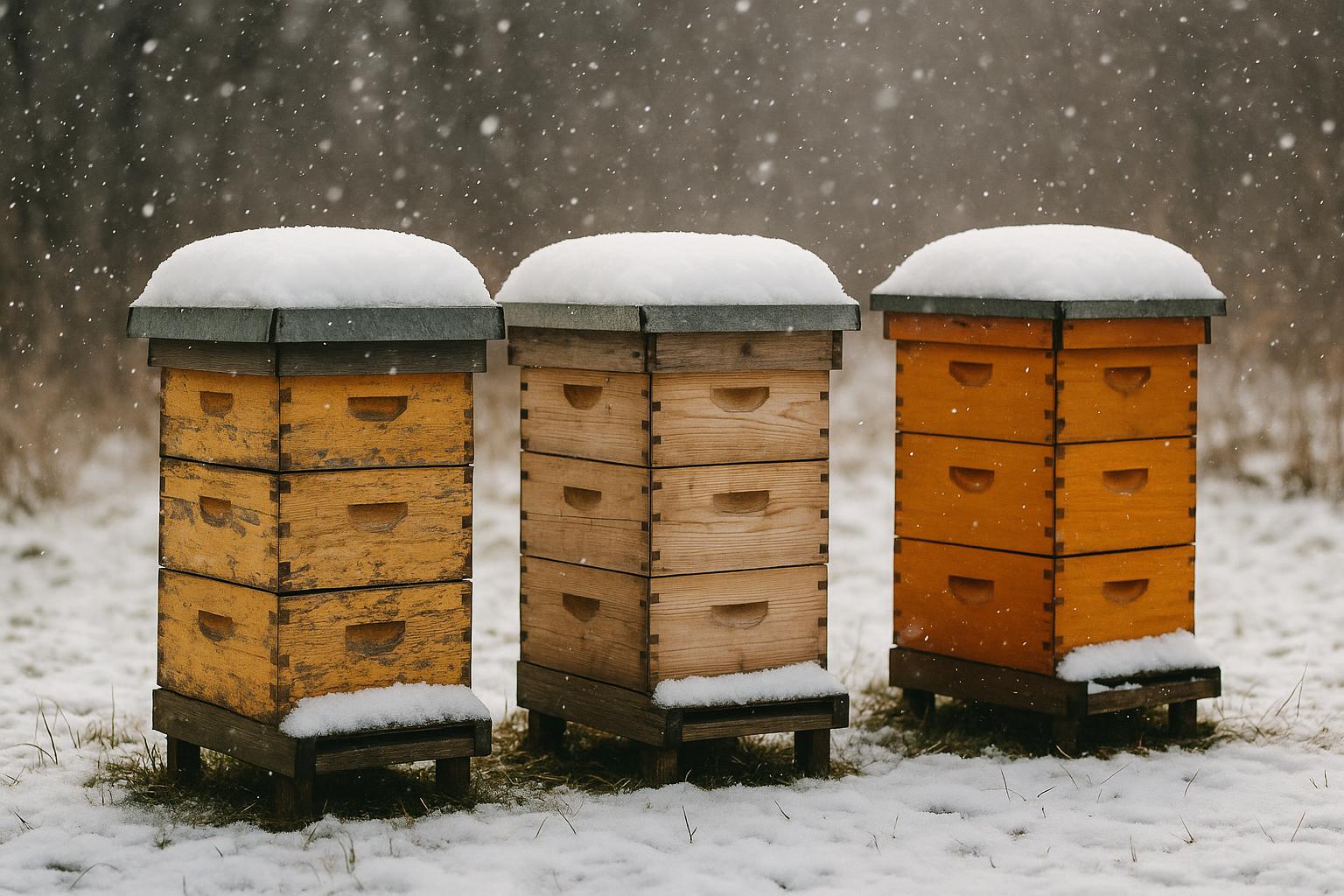
In colder or wind-prone areas, beekeepers add protective measures to help stabilize internal conditions. They may wrap hives with foam insulation, position boxes near windbreaks, or orient hives toward the sun. They also install entrance reducers to narrow openings, block robbing attempts, and keep rodents out. These combined actions stabilize hive temperatures and reduce drafts.
Beekeepers secure the structure of each hive to prevent shifting or water damage. They strap components together to resist wind-lift, and they level hive stands so water drains away rather than pools underneath. These adjustments support cluster formation and reduce dampness inside the hives.
After finishing preparations and once temperatures consistently remain below the bees’ flight range, beekeepers stop active management. They rely on indirect signs to track hive status, such as snow melt patterns, moisture on covers, or the sound of internal buzzing. Some also use temperature or humidity sensors to monitor conditions without opening the hive. These methods help verify colony activity while preserving warmth and avoiding stressing the bees.
Beekeepers continue essential monitoring despite limited winter access, based in part on the weather conditions of the region. They tailor insulation and placement strategies to colony size, ambient temperature, and hive strength. A small colony in a northern zone may need extensive protection, while a larger one in a milder area may succeed with fewer interventions.
Timely winter adjustments help reinforce earlier steps. If needed, beekeepers clear blocked entrances or re-seat misaligned covers without disrupting the bees. They also check that hive lids remain sealed during strong winds, especially in exposed areas or after snowfall. These corrections help maintain airflow and temperature consistency and reduce colony stress.
When winter tasks are complete and risk is minimized, hobbyists can then plan their next actions. They align splits with local nectar flow, schedule requeening to match drone availability, and stage equipment based on lead times and bloom forecasts. Using winter monitoring data to set dates, beekeepers replace reactive fixes with planned capacity changes. This shift from recovery to planning defines what winter preparation makes possible.
About Alex Culbreth
Dr. Alex Culbreth is a Valdosta physician who practices at South OBGYN Associates, where he provides robotic-assisted surgery, infertility management and treatment for pelvic conditions. His professional background includes serving as chief of staff at South Georgia Medical Center and holding leadership positions on medical committees and local boards. In addition to his clinical work, he is an active hobby beekeeper who maintains more than thirty hives and produces honey during the summer season. His long experience managing colonies supports his understanding of winter preparation needs for beekeepers.