


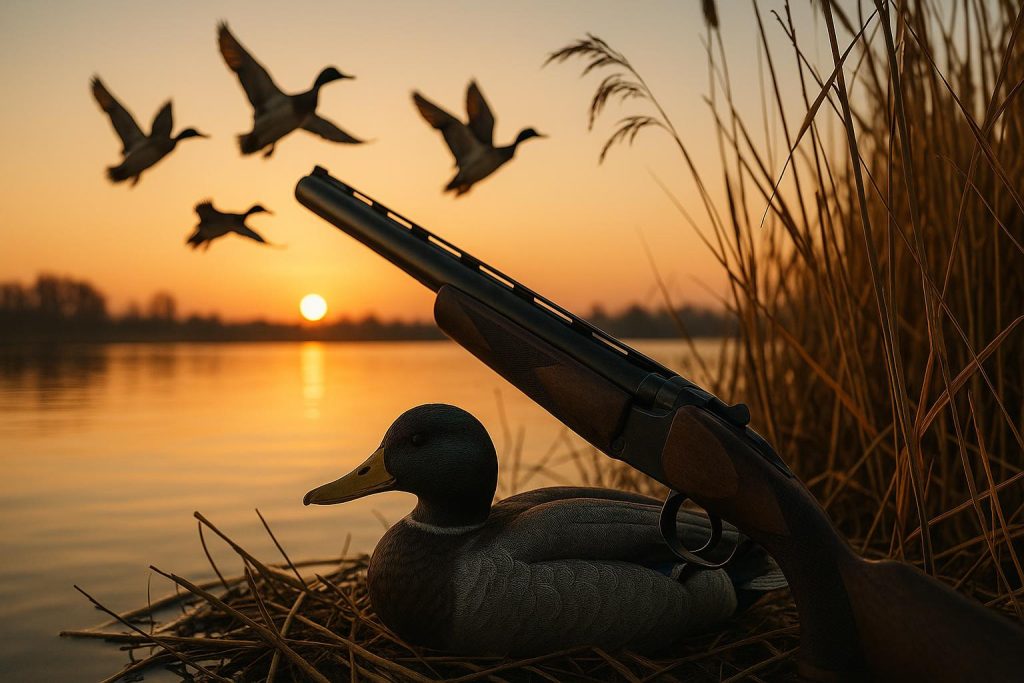
Joseph Patrick Roop is a Charlotte-based financial executive, founder and president of Belmont Capital Advisors, and a recognized specialist in retirement planning and portfolio management for high-net-worth individuals. Having built his career at firms such as Prudential Financial, MassMutual, Legg Mason, and Wells Fargo Advisors before establishing his own firm in 2009, Joseph Patrick Roop brings the same disciplined, preparation-focused approach to his personal interests that he applies in his professional work. An avid outdoorsman and active member of Ducks Unlimited, he is deeply passionate about waterfowl hunting and the conservation of wetland habitats. He studied finance at Marshall University in Huntington, West Virginia, and hosts the financial program Retire(meant) for Living, helping listeners build sound retirement strategies.
Duck hunting success depends on preparation long before the season opens. Scouting locations, understanding waterfowl behavior, and selecting the right equipment make a meaningful difference in how productive your time in the field will be.
Location is one of the most important factors in waterfowl hunting. Ducks and geese follow predictable migration corridors and tend to favor certain types of habitat depending on the season. Shallow wetlands, flooded fields, river backwaters, and coastal marshes all attract birds in different ways. Identifying where birds are actively feeding and resting before you set up gives you a significant advantage.
Decoy placement affects whether birds commit to your spread or veer off at the last moment. Most waterfowl hunters use a landing zone configuration, placing decoys in a way that leaves an open area where birds will want to land. Wind direction matters for how ducks approach. Birds typically land into the wind, so setting your spread to take advantage of prevailing winds increases the chances of birds coming in at the right angle.
Calling is a skill that takes time to develop. Many hunters overcall, which can spook birds that are already close. Ducks use calls to communicate specific things, and matching your calling cadence to what the birds are doing tends to work better than constant aggressive calling. Listening to live birds and spending time practicing helps build a more realistic sound.
Concealment is often the difference between a successful hunt and birds that flare before coming into range. Natural cover like cattails, brush, and timber works well when available. Blinds and layout boats can extend your range of locations. Regardless of your setup, minimizing movement and keeping your profile low once birds are working the decoys is essential.
Timing and weather both influence bird activity. Overcast skies and light precipitation often increase movement. Cold fronts push birds south during migration season and can concentrate populations in certain areas. Early morning and late afternoon are typically the most active periods, though that pattern can shift depending on hunting pressure and local conditions.
Shotgun choke selection and ammunition choice affect performance at different distances. Steel shot has replaced lead for waterfowl hunting under federal regulations, and the appropriate choke and load combination depends on the shot size, distance to the birds, and the gun you are using. Patterning your shotgun before the season confirms that your combination performs as expected.
Safety and legal compliance are foundational to responsible waterfowl hunting. A valid federal duck stamp and applicable state licenses are required. Knowing your shooting zones, being aware of other hunters in the area, and following established safe gun-handling practices protect everyone in the field.
Conservation participation supports the habitat and populations that make waterfowl hunting sustainable. Organizations like Ducks Unlimited have contributed to the protection and restoration of millions of acres of wetland habitat across North America. Involvement in those efforts, whether through membership, volunteering, or advocacy, connects hunters to the long-term health of the resource.
About Joseph Patrick Roop
Joseph Patrick Roop is the founder and president of Belmont Capital Advisors in Belmont, North Carolina, a financial services firm specializing in retirement planning, tax strategy, and portfolio management for high-net-worth clients. A graduate of Marshall University, he built his career at firms including Prudential Financial, MassMutual, Legg Mason, and Wells Fargo Advisors before founding Belmont Capital Advisors in 2009. An active Ducks Unlimited member and avid waterfowl hunter, he also hosts the financial program Retire(meant) for Living.